Surface Temperature Study - Plot 1
Overview
**This page under construction**
Parameters of Study
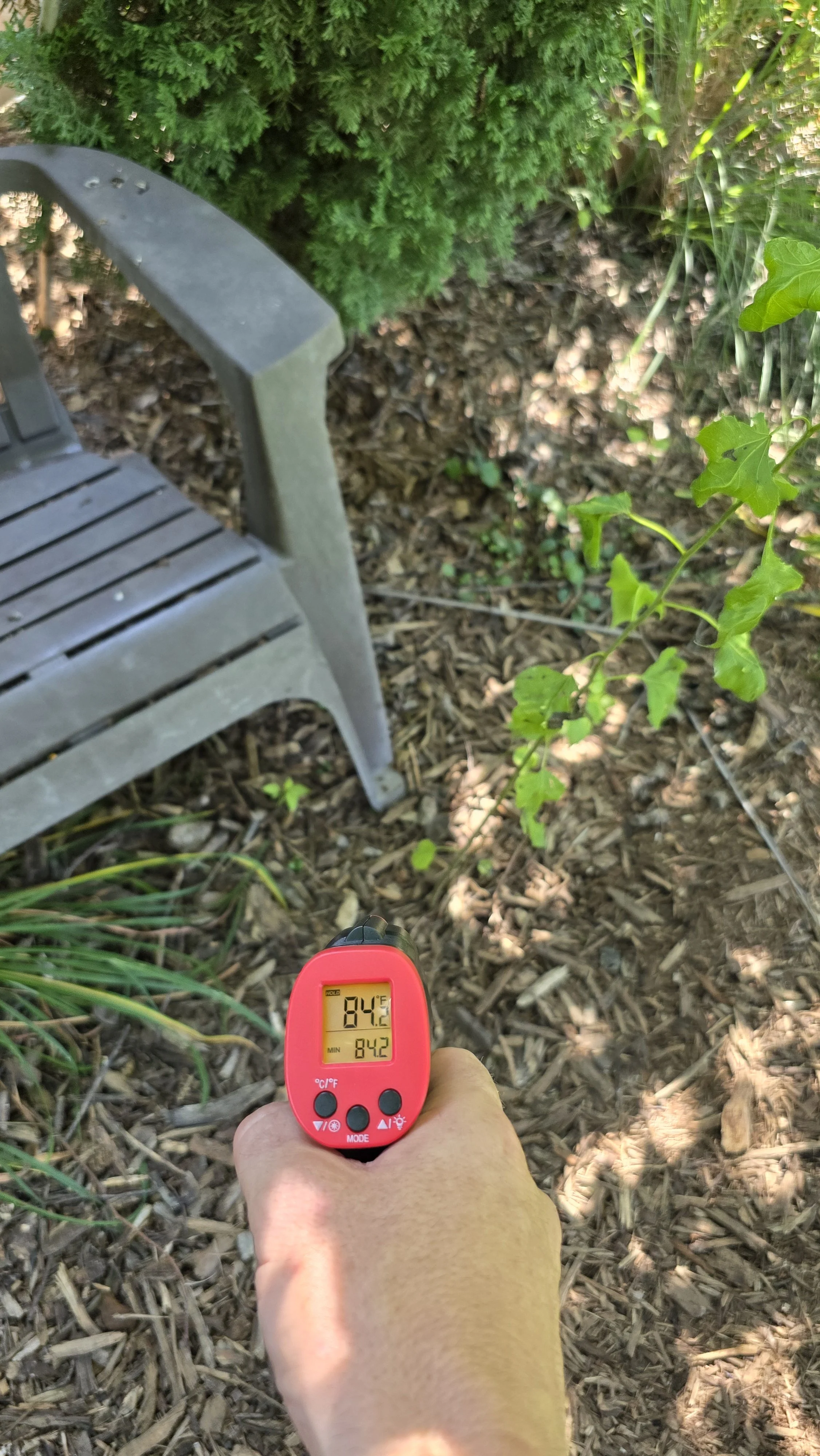
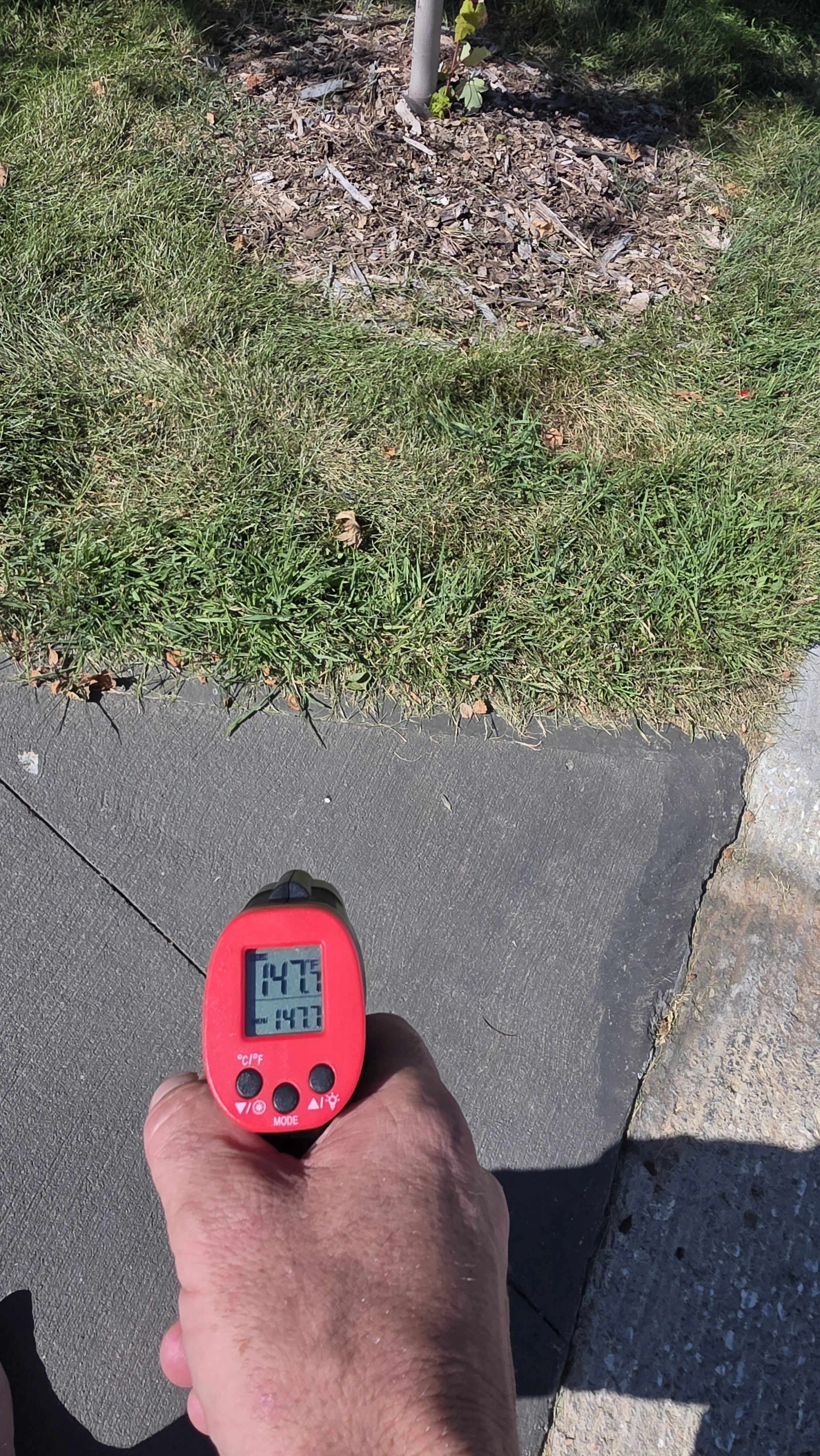
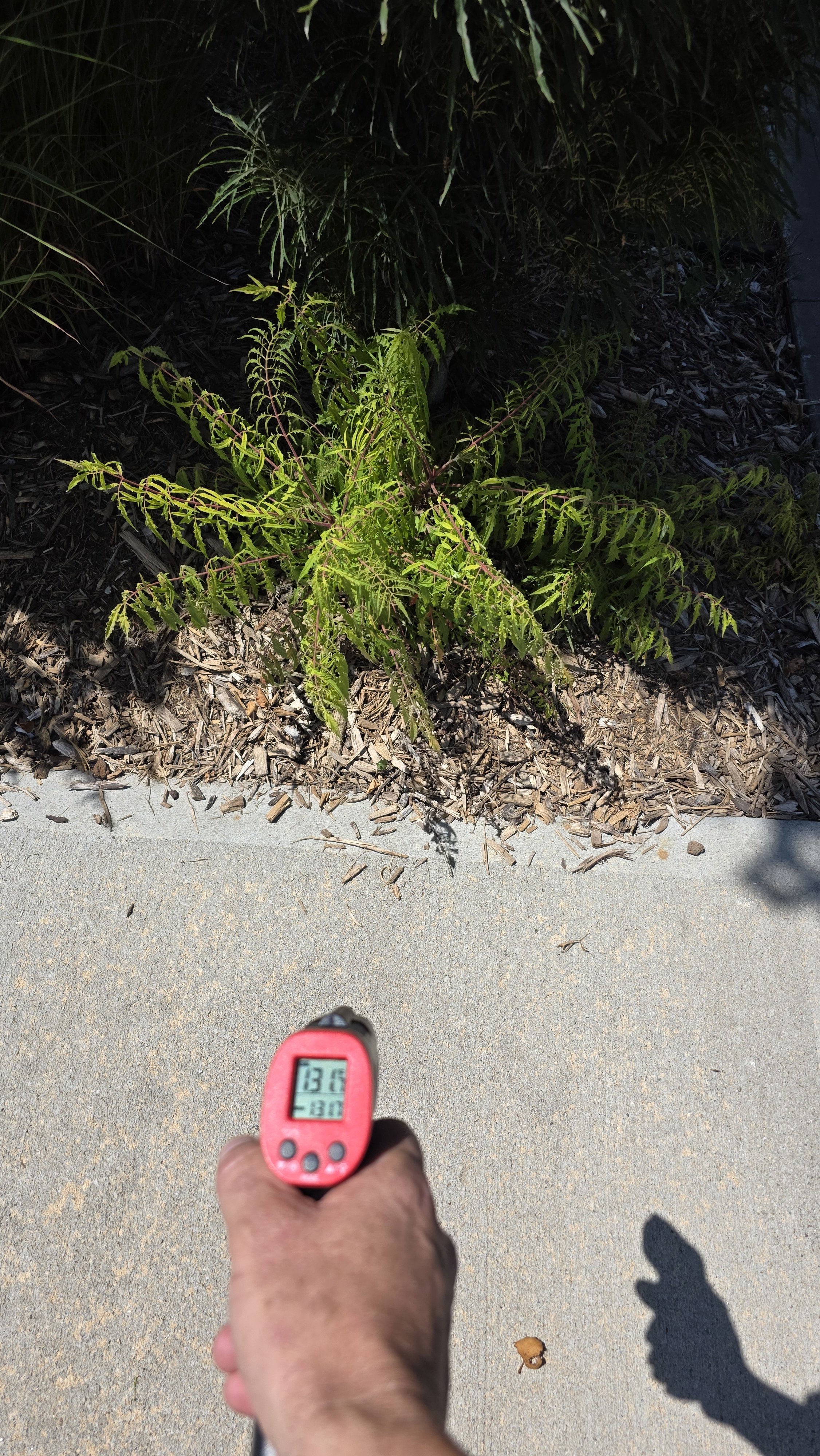
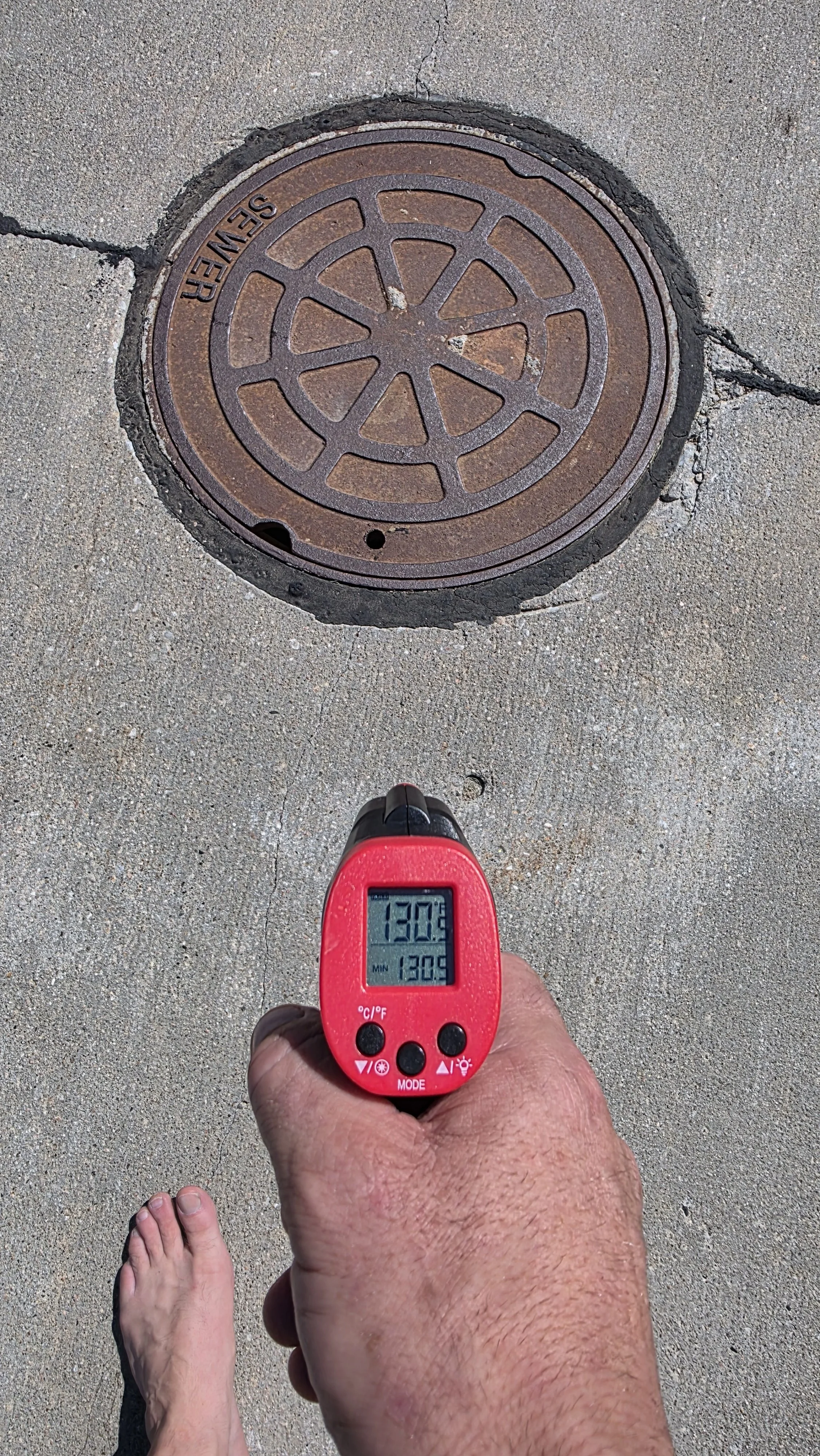
For this study I used a camera and laser thermometer. I picked a few locations across concrete, pavers, mulched landscaping, and naturally growing landscaping. I picked areas with Shade all day, areas with shade part of the day, and locations that have sun almost all day. I took pictures of the thermometer at each location as I recorded readings.
Collecting Data
Notes During Data Collection
One thing to note is I expected significantly lower surface temperatures compared to other studies. All concrete surfaces are sloped away from the angle of the sun. Temperatures would be higher if I was testing flat ground, or ground that was angled towards the sun.
Although I have many trees, they are still young, planted at most 7 years ago. Finding shaded concrete had to be below my deck on the lower patio and the pavers next to it. The pavers don't have as much thermal mass, so they head up easier and may dissipate heat easier due to lower thermal mass.
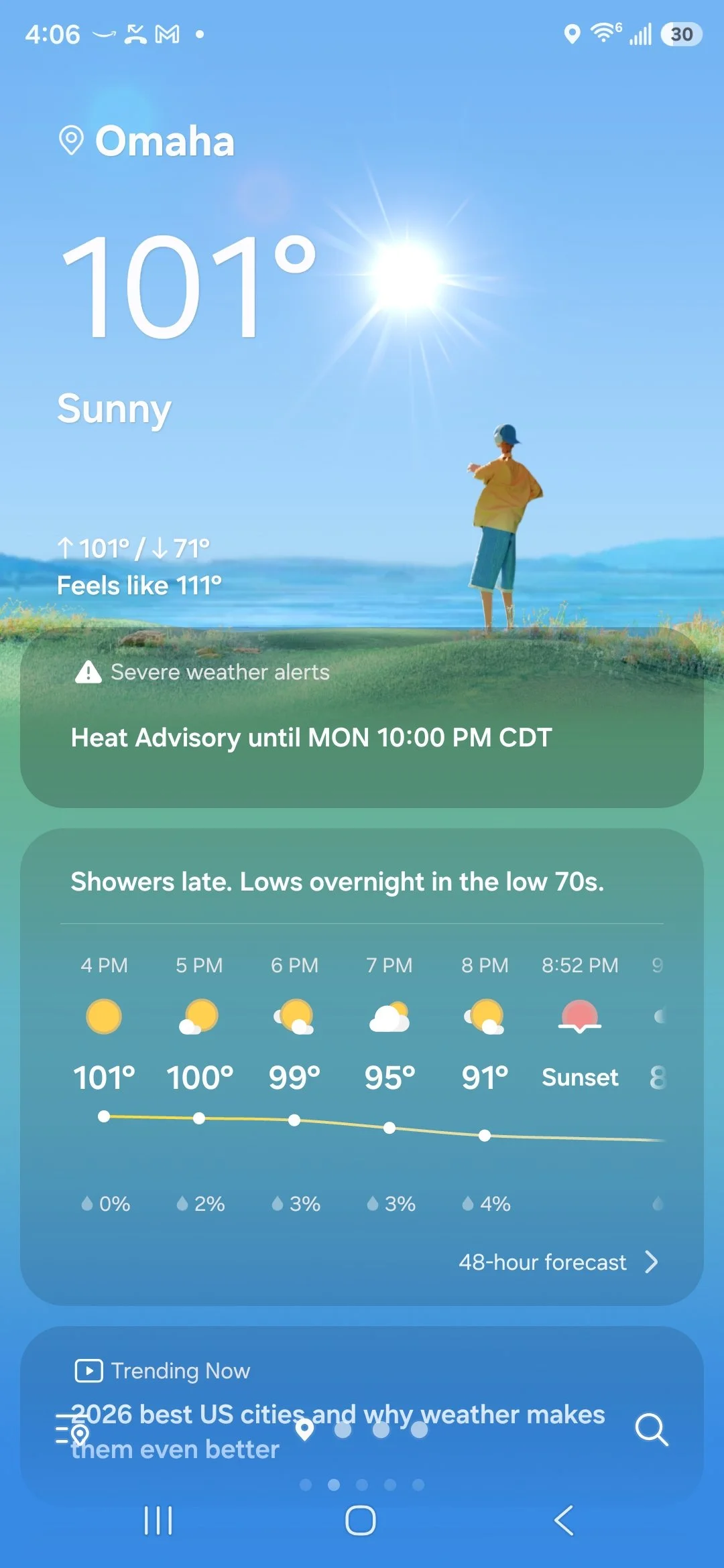
The ambient temperatures I used were from the weather app. While this might not be precise for my actual location, they should be good enough for this type of study.
The two shaded concrete locations were in the backyard, so the area in general heated up more in the late afternoon. This explains the sudden spike in temperature for both shaded concrete and shaded landscaping.
Summation
Expected findings
Part of this study was to prove through a local study what I know already; sunlit surfaces are hotter than shaded surfaces.
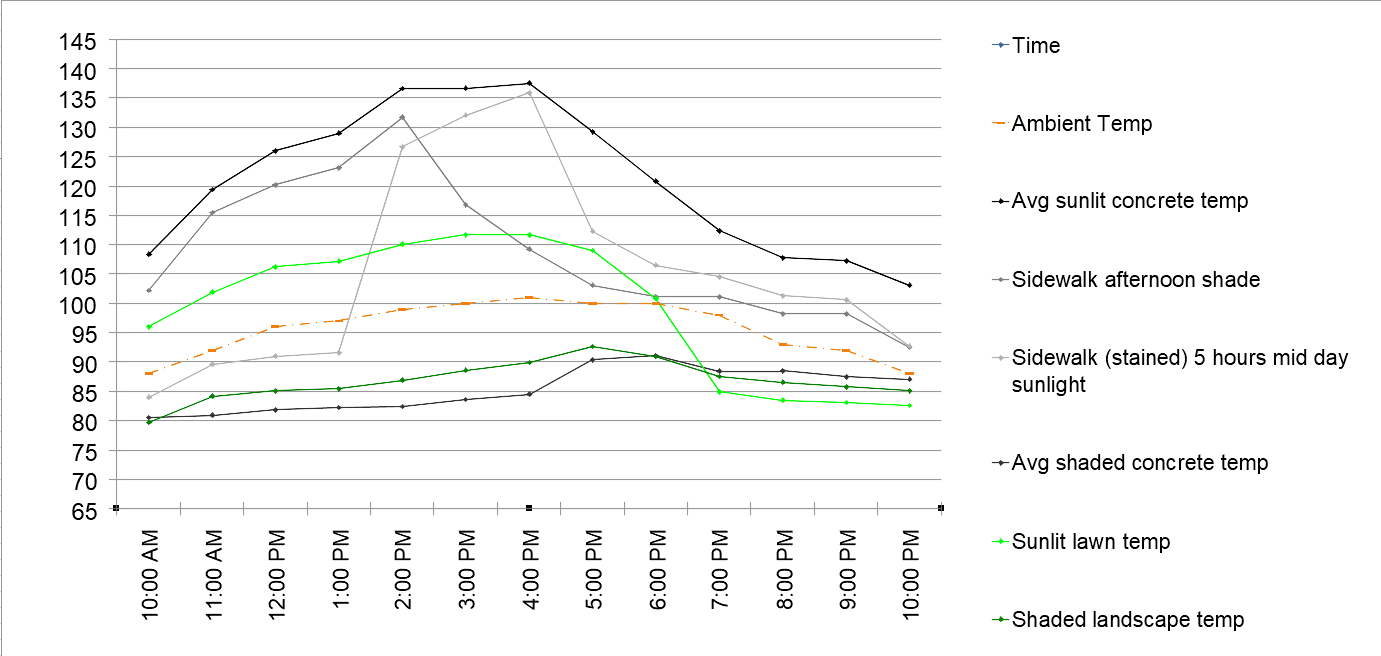
This is very clear from the charted data below. I was fortunate to have a very hot summer day with a top ambient temperature of 101 degrees. I had two concrete conditions: regular concrete and stained concrete that is a darker earth brown. I summed this up for an average, but I left two locations that experienced sun and shade at different times of the day separate.
I didn't know what to expect from bare lawn vs the landscaped areas under trees and shrubs.
The sunlit concrete areas rose in temperature quickly. Their was approximately a 55 degree difference between shaded concrete and sunlit concrete. The hottest stained concrete reading was 147.7 degrees. The hottest regular concrete reading was 131.5.
Angle of Sun vs Temperature
I already knew this from my studies, but it is still eye opening to see how the change of sun angle has a greater impact on surface temperature than the ambient air temperature. As you can see, the ambient temperature remains high in the late afternoon, but surface temperatures cool significantly as the sun gets lower on the horizon. This reinforces the idea that the results of the same study would be measurably different if done at a location with slope facing closer or further away from the angle of the sun
Various Surface Temperatures over a 12 hour period
Summation
Unexpected or Surprising Insights
Cool tree trunks
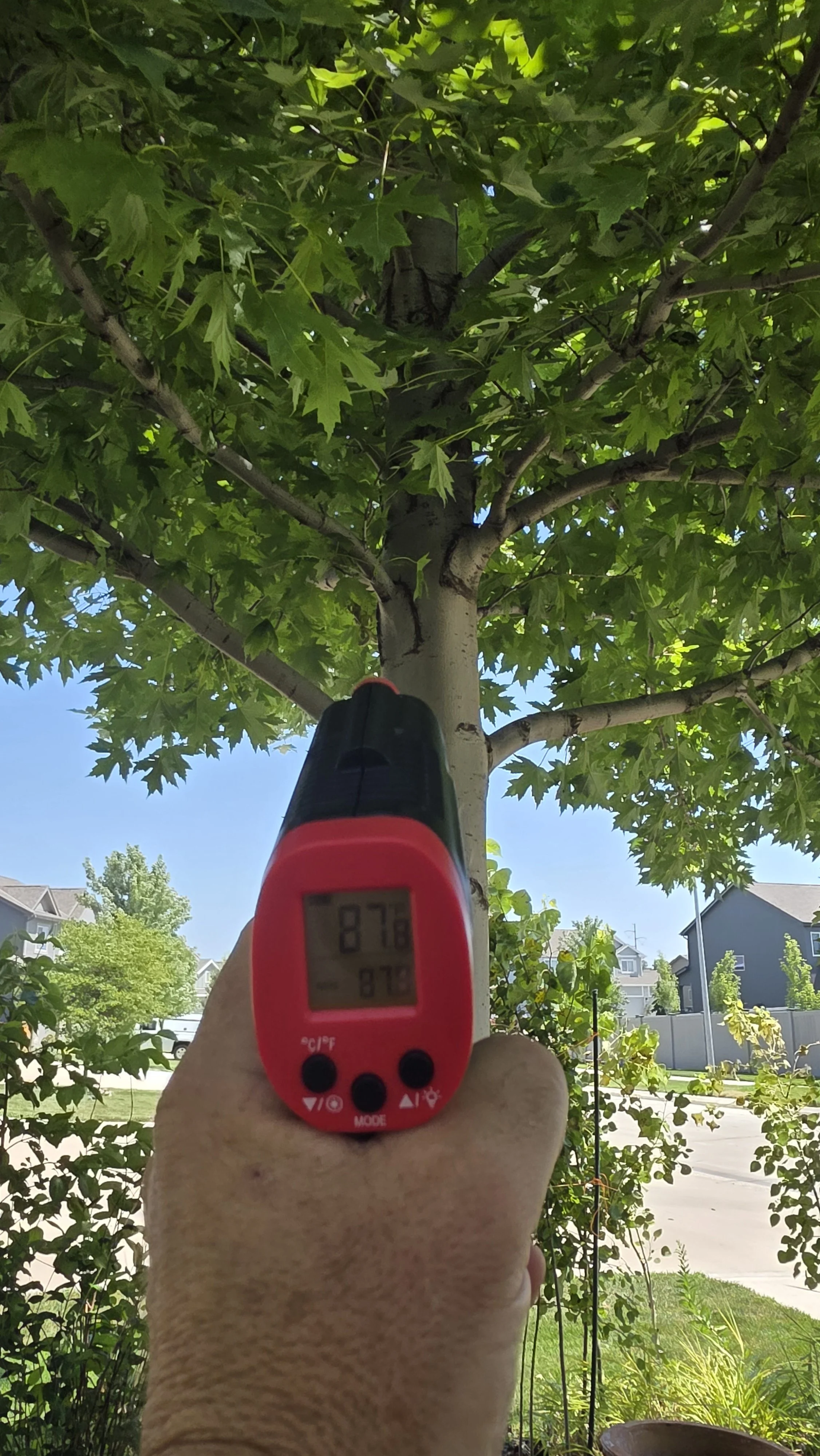
First, something not part of this study. I found that the trunk of my Autumn Blaze Maple (~6" thick at base) was much cooler than the mulch around it at the base ( ~8 degrees difference) and gradually got warmer going up. At about 7 feet from the base, the temperature was about 10 degrees warmer. My best guess is the water the tree is pulling to keep the leaves hydrated is cooling the trunk from the lower underground temperatures.
Steady Temp Changes
It was very interesting to see how steady temp changes were for the all day shaded areas. Temps stayed under the ambient temperature all day and didn’t have any real spikes. There is a small jump, and that is due to these locations being on the west side of the house, and the afternoon sun did reach those areas slightly.
The impact of partial shade on concrete
It’s interesting to see what the two areas of concrete did as they either got exposed to the sun mid day, or had sun through the morning/late afternoon and was shaded for the rest of the day. These two locations both almost reached the temp of the average other locations, but they both dropped off to a level significantly lower than the all day sun locations. The speed at which they rose to their high temps was impressive.
The quick recovery of sunlit soil
The sunlit soil actually did get pretty warm. The grass is pretty long, but it is thinner with the series of hot days. It’s temp went up pretty evenly. How it went down was remarkable. Even though the ambient temp had not really changed, the soil surface temp plummeted. This shows how important the angle of the sun to the surface is. Keep in mind, most the surfaces I tested are to some degree slopped way from the sun. If I did these same checked on a street that was a south facing slope, or maybe east or west facing, I am sure my results would have changed for surface temps.
Mulch staying warmer than wild growing areas
I was surprised the mulched area under the aspen trees was warmer than the mostly baren ground I was testing under the tiger eye sumacs. This makes sense when I think of the mulch as a blanket. One thing I would like to test later is the temp right under the mulch. I’m guessing it was a lot cooler than the bare ground. This is excellent for all the root systems. They are able to survive the heat easier, but also have access to more ground water that is not drying up as easily as the unprotected ground.
Summation
Notes
Summary of findings
The findings are about what I expected with a few surprises. My next step will be to compare them to available data on the subject.
Future Temperature Studies
I thought of a lot of things I would do differently or add into the study next time I do it. The day before, I may keep an eye on the sun to see what areas get sun and record what hours they are shaded. Also, I would like to test 2-3 more locations:
Concrete sloped south, west, and east
Black top
A driveway that is concrete but has openings to allow water to travel through
What I could do better with next time
asdf a asdasd a asdf asdftr asd fgasd asd
How much the concrete heat battery affects local temperatures
asdf a asdasd a asdf asdftr asd fgasd asd
The effects of staining concrete a dark color
The temperatures were significantly higher on the stained concrete that on the regular concrete street. This concrete did have an angle slightly closer to the angle of the sun, but the color had the most influence on the higher temps. The color is an earth or rich soil brown. Eventually, two Atum Blaze Maples and a Plane Tree Exclaimation are going to complety shade this driveway, so it’s not a big concern. The dark concrete is great during the winter when you want the ice to melt. For summer temperatures, I would recommend lighter colors to keep the heat down.
What this study means to you and your property
asdf
Final Thoughts
This study backs up other statistics that show canopy cover over concrete can reduce local temperatures significantly. Other studies mention ........................................ I hope this encourages you to think about where to plant trees, and what types to plant for each location. From what I found, a variety of dense shrubs and ferns had a significant impact in conjunction with the trees. A biodiverse plot of land has numerous benefits to you, wildlife, and the soil beneath your feet.